Fleet management
Asset Recovery and Reverse Logistics: Leasétic's Commitment to Sustainable and Circular IT
Discover how Leasétic integrates asset recovery and reverse logistics into its sustainable IT strategy
Quentin
July 7, 2026

Discover how Leasétic integrates asset recovery and reverse logistics into its sustainable IT strategy
Introduction
With ecological transition becoming a strategic priority, companies in the mobility and technology sectors must rethink their economic model. The end-of-life of equipment no longer means disposal, but opens the door to new opportunities for value recovery. At Leasétic, revalorization and reverse logistics are essential pillars of our CSR approach, allowing us to reconcile economic performance and environmental responsibility.
Reverse logistics refers to all processes involved in managing the return of products from their point of use to their point of origin or processing. Applied to the IT and mobility sectors, this approach radically transforms equipment lifecycle management, shifting from a linear 'extract-make-dispose' model to a truly circular economy.
According to the Institute of Commerce, reverse logistics is central to the circular economy by enabling value recovery at every stage of a product's lifecycle. This approach is not limited to simple recycling: it encompasses collection, sorting, refurbishment, resale, and only as a last resort, material recycling.
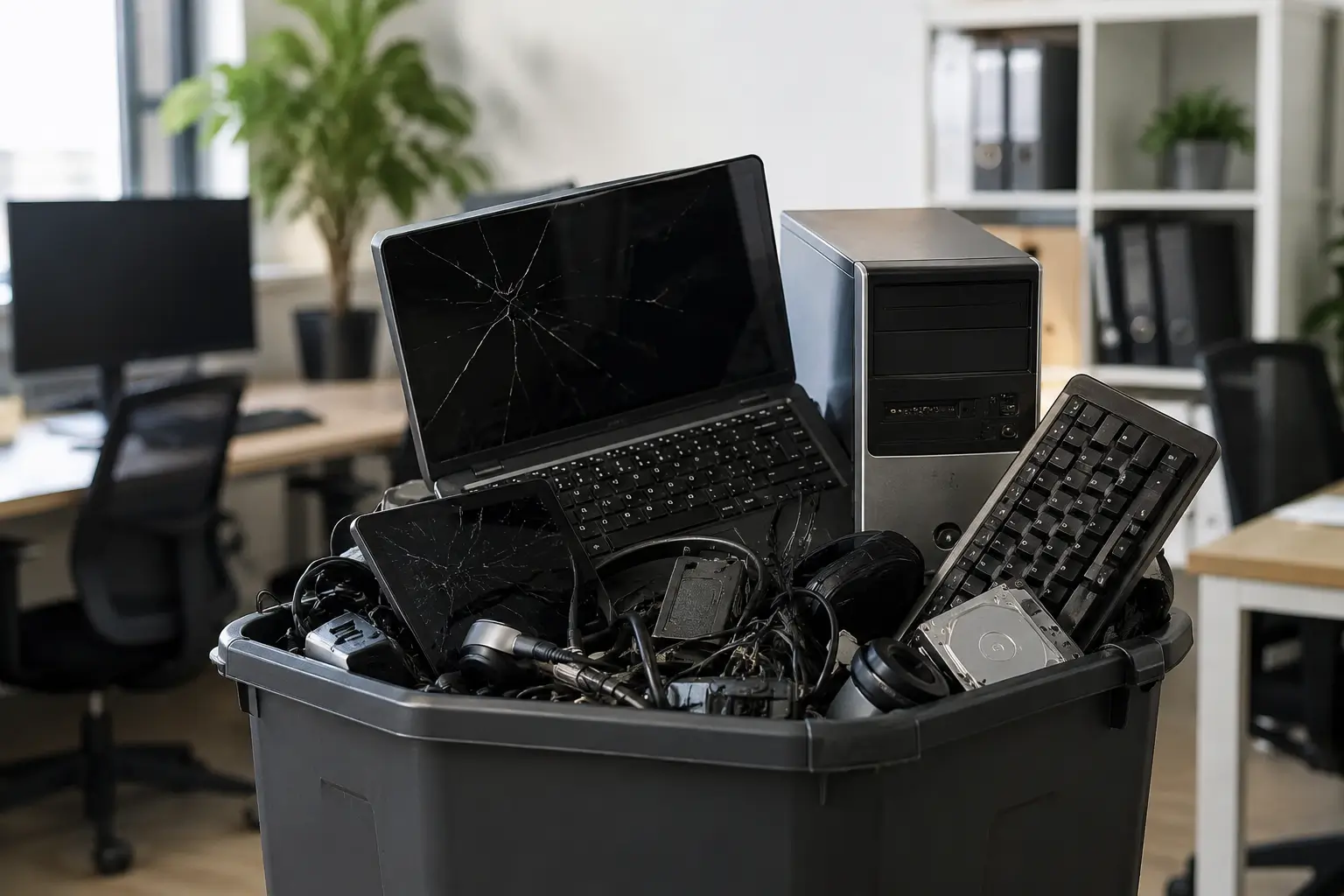
In the IT sector, the stakes are considerable. IT equipment contains valuable and rare resources, the extraction of which generates a significant environmental impact. Extending their lifespan and optimizing their reuse therefore becomes an ecological and economic imperative. As highlighted by a study published in the Journal of Environmental Management, reverse logistics directly contributes to the reduction of CO2 emissions and the preservation of natural resources.
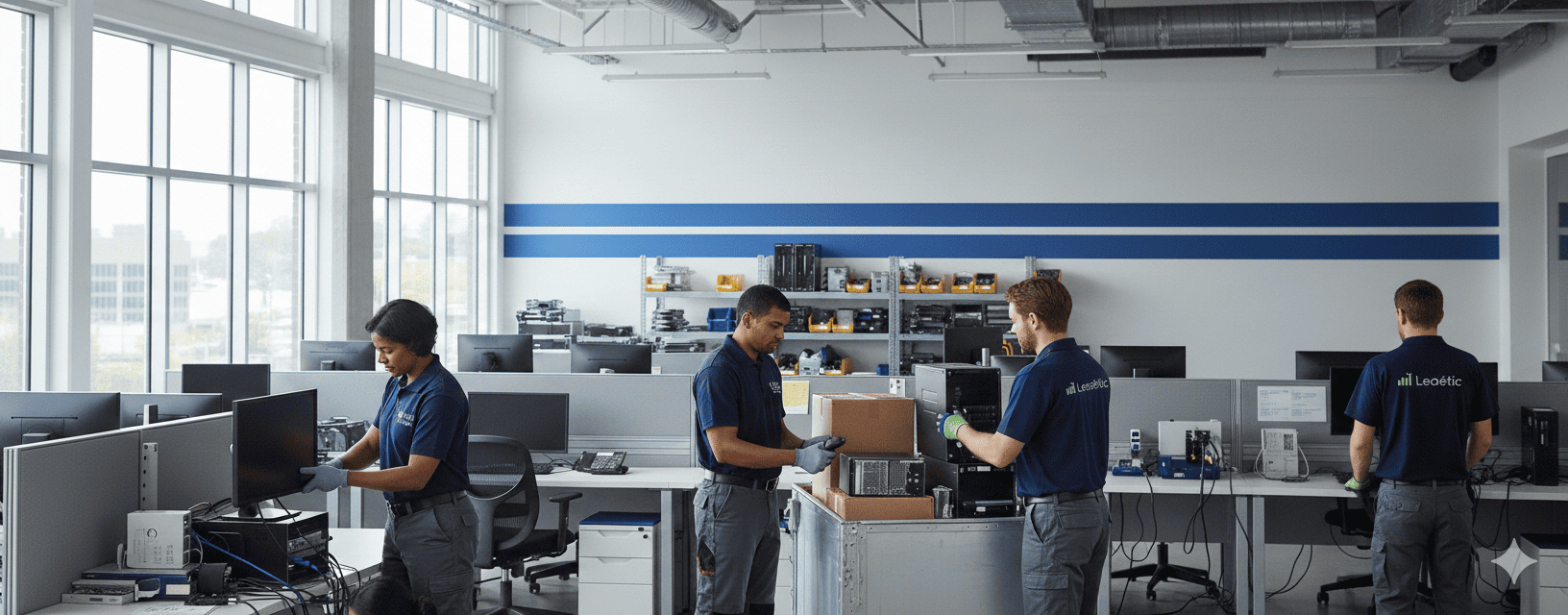
At Leasétic, our reverse logistics process is structured around several rigorous phases:
This structured approach optimizes the revalorization rate and minimizes the environmental footprint of our operations.
IT asset recovery is a major CSR lever for companies committed to ecological transition. According to Dinaco, an expert in IT lifecycle management, asset recovery can reduce an equipment's carbon footprint by up to 80% compared to purchasing new hardware.
At Leasétic, we identify several levels of asset recovery:
Premium Refurbishment : equipment in excellent condition is refurbished, rigorously tested, and then reintroduced to the market with a warranty. This second life allows us to offer high-performance solutions at affordable prices while preserving the environment.
Repair and Upgrade : some hardware requires targeted interventions (component replacement, software updates) to regain optimal performance. This approach significantly extends the lifespan of the equipment.
Responsible Recycling : when reuse is no longer possible, we direct equipment to certified channels that ensure material recovery in compliance with the strictest environmental standards.
The benefits of asset recovery extend far beyond the environmental aspect. Our approach also generates:
At Leasétic, asset recovery and reverse logistics are not peripheral activities; they are integrated into the core of our flexible leasing model. From the design of our offerings, we anticipate the end-of-life of equipment to maximize its reuse potential.
Our asset recovery process relies on certified partners and dedicated infrastructure, ensuring:
Asset recovery and reverse logistics represent far more than just a regulatory obligation or a fleeting trend: they embody a profound transformation in our relationship with resources and consumption. For Leasétic, these practices form the foundation of truly sustainable mobility, where every piece of equipment is designed to last, evolve, and be reinvented.
By integrating these processes into the core of our flexible leasing offering, we enable our clients to combine operational performance with environmental commitment. Every piece of equipment collected, assessed, and repurposed becomes a link in a virtuous chain that benefits the entire ecosystem: businesses, end-users, refurbishment players, and ultimately, our planet.
The future of mobility and technology inevitably lies in this circular approach. At Leasétic, we are proud to actively contribute to this transition, by proving every day that technological innovation and environmental responsibility can not only coexist but also mutually reinforce each other.