
Compare the environmental impact of your IT infrastructure


Assessing the carbon footprint of your IT equipment is essential for greener, but often complex, digital technology. Without a clear vision of the impact of your past choices, it is difficult to initiate change. The Carbon Footprint Comparator offers you a precise starting point: the impact in kg CO2eq of your current fleet, according to the ADEME methodology.
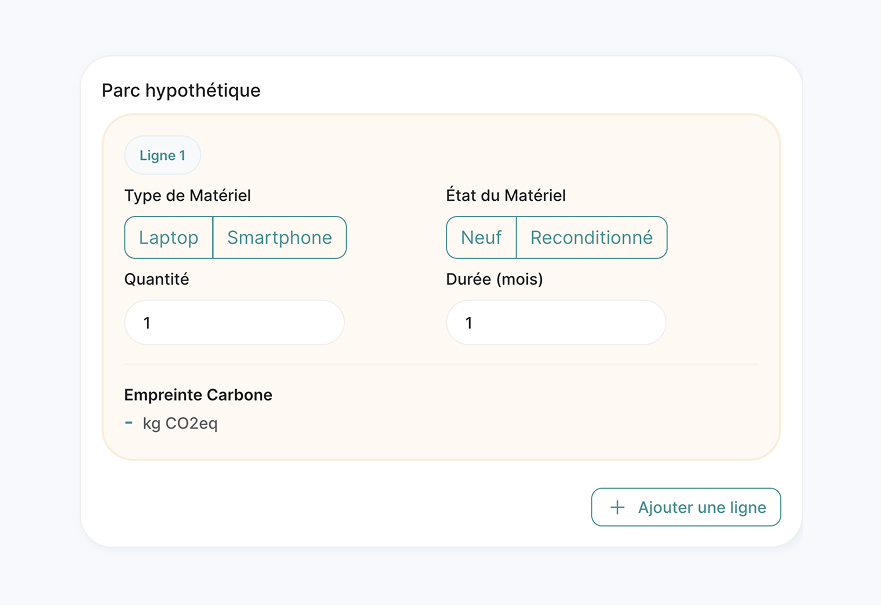
After establishing your current footprint, use our tool to simulate an optimized strategy. Adjust hardware, upgrade to refurbish, or extend use. Compare the footprint of your current fleet to a hypothetical fleet to see the difference in kg CO2eq, justifying your CSR decisions.
How does refurbishing IT for businesses contribute to sustainability and waste reduction?
Reconditioning is the process of reconditioning a used device for a new purpose. Remanufacture goes further: it is a rigorous and standardized industrial process (dismantling, cleaning, replacement of key components) that guarantees quality close to new and extends the life of the product over several cycles. This is the most virtuous approach for the circular economy.

70-90% of the carbon impact of IT equipment is concentrated during its manufacture (extraction of raw materials, transport, assembly). By extending the lifespan or by choosing remanufactured products, the company mostly avoids this impacting phase. Our calculator allows you to precisely quantify this avoidance.
Yes. Unlike the used one, a remanufactured device has undergone rigorous tests, the replacement of wearing parts (battery, screen if necessary) and a professional warranty is applied. This ensures CIOs performance and reliability comparable to new, but with a greatly reduced environmental impact.
Repairing and extending the lifespan are pillars of the circular economy. By repairing rather than throwing away, you reduce WEEE (Waste Electrical and Electronic Equipment) and the depletion of resources. It is a strategic and responsible choice that reinforces your company's CSR commitment.